
Crochet braids are popular because they can create a full style without requiring every strand to be individually braided from the root. Once the base is prepared, the personality of the finished look comes down largely to the texture you choose. Body wave, deep wave, and water wave can all look beautiful, but they do not create the same effect.
Body wave: polished and flowing
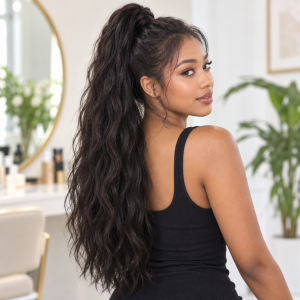
Body wave crochet hair has broad, relaxed curves. The pattern is softer than a tight curl and gives the hair a smooth, flowing appearance. It is a good choice when you want movement without a lot of visual volume.
Because the wave pattern is larger, body wave can read as more polished or glam. It works especially well for longer styles where you want the movement of the hair to be visible from top to bottom.
Deep wave: defined and dramatic
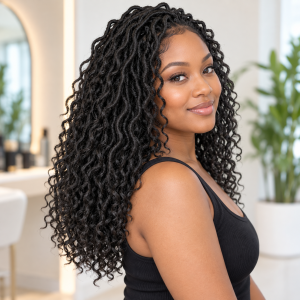
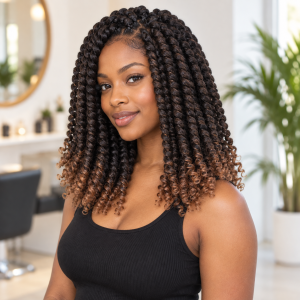
Deep wave has a tighter, more consistent pattern. Compared with body wave, it creates more visible texture and usually appears fuller. The pattern holds attention even when the hair is worn in a simple center or side part.
If your ideal crochet style is defined, textured, and a little more dramatic, deep wave is worth considering. It can also be a good option when you want the finished style to look full without relying on extremely long hair.
Water wave: soft texture with flexibility
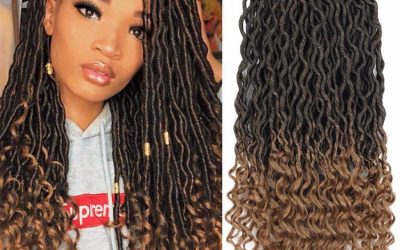
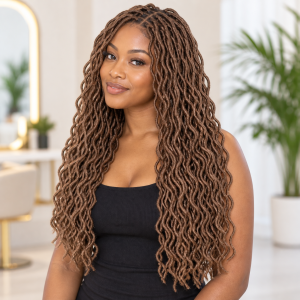
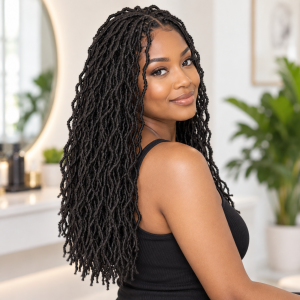
Water wave tends to sit between loose waves and defined curls. It has an easy, textured look that works well for bohemian and free-flowing styles. Depending on the specific fiber, water wave can also be useful for twist-inspired looks because the texture already has movement built into it.
It is a strong choice when you prefer a less uniform finish and want the hair to have a soft, effortless appearance.
Which texture looks the fullest?
Deep wave and water wave generally create more visible volume than body wave because their patterns take up more space. That does not necessarily mean you need more hair. In fact, adding too much textured crochet hair can make the finished style bulkier than expected.
Start with the density you actually want, especially around the crown and hairline. A good install should allow the texture to move instead of packing every section as tightly as possible.
Match the texture to your maintenance style
All textured synthetic hair benefits from gentle handling. Separate sections with your fingers instead of over-brushing, protect the hair at night, and trim obvious tangles rather than repeatedly pulling through them. Looser body waves can be easier to separate visually, while deeper textures may need a little more attention to keep individual sections defined.
Choose the look, not just the name
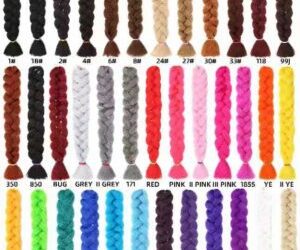
Texture names are useful, but photos matter. One brand’s “deep wave” may look slightly different from another brand’s pattern. Compare the actual product image and color options before deciding.
Opulent Enterprise carries multiple braiding and crochet-hair options, including body-wave, deep-wave, and water-wave styles, so you can compare the finish that best matches your goal.
Think about how you want to style it after installation
Body wave is easy to wear in a simple down style because the broad pattern already creates movement. Deep wave can look especially good in side parts, half-up styles, and fuller silhouettes. Water wave works well when you want a more relaxed texture that can be separated into a soft, bohemian shape.
Also consider how much time you want to spend separating and reshaping the hair. More defined textures can look fuller, but they may benefit from a little extra finger styling. Looser patterns often look polished with less manipulation.
Quick texture checklist
- Choose body wave for smooth movement and a polished finish.
- Choose deep wave for stronger definition and visible volume.
- Choose water wave for soft texture and a more effortless look.
Explore the collection at Opulent Enterprise →
Affiliate disclosure: Opulent Enterprise may earn a commission from qualifying purchases made through product links, at no additional cost to you.





0 Comments